
DVD vs Blu-ray: 9 Key Differences That Matter for Your Collection
Standing between a $29.90 DVD and a $39.90 Blu-ray of the same TV season? The DVD vs Blu-ray question comes down to more than price. Picture detail, sound, player compatibility, region codes and even how a show was originally made all change which disc is the smarter buy.
This guide breaks down the nine differences that actually matter, with real examples from our shelves, so you can choose the right format for every title in your collection.
Quick answer: Blu-ray wins on picture and sound, with 1080p video, lossless audio and far more room for extras. DVD wins on price, player compatibility and catalog depth. If you watch on a large HD or 4K TV and the title was made in high definition, pick Blu-ray. For older TV shows, budget collecting or a DVD-only player, DVD is still a smart choice.
DVD vs Blu-ray at a Glance
Here is the DVD vs Blu-ray comparison in one table. Each row is explained in more detail below.
| Feature | DVD | Blu-ray |
|---|---|---|
| Launched | 1997 (US) | 2006 |
| Video resolution | 720×480 (NTSC) or 720×576 (PAL) | 1920×1080 (Full HD) |
| Disc capacity | 4.7 GB single layer, 8.5 GB dual layer | 25 GB single layer, 50 GB dual layer |
| Maximum video bitrate | About 10 Mbps | Up to 40 Mbps |
| Audio | Dolby Digital and DTS (compressed), up to 5.1 | Dolby TrueHD and DTS-HD Master Audio (lossless), up to 7.1 |
| Plays on | DVD players, Blu-ray players, 4K players | Blu-ray and 4K Blu-ray players only |
| Region codes | Regions 1 to 8 | Regions A, B and C |
| Best for | Older TV shows, budget sets, any player | HD films, large screens, home theater sound |
1. DVD vs Blu-ray Picture Quality: 480p vs 1080p
Resolution is the biggest gap in the DVD vs Blu-ray debate. A standard DVD in the US holds a 720×480 picture, about 345,600 pixels per frame. A Blu-ray holds 1920×1080, about 2.07 million pixels. That is six times more picture information in every frame.
On a small bedroom TV, a good DVD can still look pleasant. On a 55-inch or larger screen, the difference is easy to see. Faces show skin texture, background signs become readable, and fine patterns like fabric or hair stop shimmering.
Bitrate matters as much as resolution. A Blu-ray can carry video at up to 40 Mbps, while DVD tops out around 10 Mbps. More data per second means less compression, so dark scenes, fast action and smoke or water look cleaner, with fewer blocky artifacts.

One more point: Blu-ray players upscale DVDs to 1080p or 4K. Upscaling smooths the image and makes it fill your screen properly, but it cannot invent detail that was never on the disc. An upscaled DVD looks better than a DVD on an old player, yet it still looks softer than a native Blu-ray.
2. Sound: Compressed Audio vs Lossless Audio
Sound is the second big DVD vs Blu-ray difference, and it is easy to overlook. DVDs use Dolby Digital or DTS audio, both of which compress the sound to save space. Most DVDs offer 5.1 surround, which still sounds good through a basic soundbar.
Blu-ray adds lossless formats such as Dolby TrueHD and DTS-HD Master Audio, with up to 7.1 channels. Lossless means you hear exactly what the studio mastered. With a proper receiver and speakers, music swells, dialogue clarity and the punch of explosions all improve.
If you listen through your TV’s built-in speakers, the audio side of DVD or Blu-ray matters less. Picture quality will be the deciding factor for you.
3. Storage Capacity and Bonus Features
Capacity is the hidden DVD vs Blu-ray difference that drives almost everything else. A single-layer DVD holds 4.7 GB and a dual-layer DVD holds 8.5 GB. A single-layer Blu-ray holds 25 GB and a dual-layer disc holds 50 GB, roughly five to six times more space.
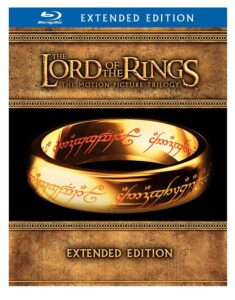
That extra space does two jobs. First, it lets studios use less compression. Second, it leaves room for commentaries, documentaries and deleted scenes in high definition. The Lord of the Rings Extended Edition Blu-ray trilogy, for example, packs all three extended films and hours of appendices into 15 discs.
For long TV runs, capacity also changes the size of the box. The Star Trek: The Next Generation complete series on DVD spans 49 discs, which is a lot of disc swapping across seven seasons.

4. Price: What You Pay for Each Format
Price is where most shoppers settle the DVD vs Blu-ray question. DVD is almost always cheaper. In our catalog, The Office: Season 1 on DVD is $29.90, while The Office: Season 1 on Blu-ray is $39.90. That $10 Blu-ray vs DVD gap is typical for a single TV season.
The gap shrinks for older films. Classic movies on Blu-ray often sell for little more than a new DVD, such as To Kill a Mockingbird on Blu-ray at $22.95. On the other end, if you just want to watch a movie tonight for very little money, our titles under $15 are mostly DVDs.

When you build a full series, the difference adds up. Nine seasons of a sitcom at $10 extra per season is $90 more for Blu-ray. Decide whether you will notice the upgrade on your screen before you commit to a whole run.
5. Player Compatibility
Compatibility is where DVD has the edge in the Blu-ray vs DVD matchup. A DVD plays in a DVD player, a Blu-ray player and a 4K Ultra HD Blu-ray player. Many laptops and older computers with a disc drive also read DVDs.
A Blu-ray disc needs a Blu-ray player or a 4K Blu-ray player. It will not play in a regular DVD player at all. Blu-ray players are backward compatible, so if you buy one, your existing DVD shelf keeps working.
Simple rule: if your only player is a DVD player, buy DVDs. If you own a Blu-ray or 4K player, you can buy either format for each title.
6. Region Codes and NTSC vs PAL
Both formats use region coding, and this catches many collectors who buy imports. DVDs use numbered regions. Region 1 covers the United States, Canada and US territories. Region 2 covers Europe, Japan, the Middle East and South Africa.
Blu-ray uses letters. Region A covers the Americas and parts of East Asia, Region B covers Europe, Africa, Australia and New Zealand, and Region C covers most of the rest of Asia, including China, India and Russia. A Region B Blu-ray will usually not play on a US player.
DVDs have a second hurdle: TV standards. North American DVDs are NTSC, while UK and European DVDs are usually PAL. Many US players cannot output PAL video correctly, even if the disc is region free. Always check the back of the case or the product details for region and format before you buy an import. The Home Cinema Guide region code explainer has full maps of every region.
7. Durability and Disc Care
In a Blu-ray vs DVD durability test, Blu-ray usually comes out ahead. Blu-ray discs store data just under a hard protective coating, which makes most of them more resistant to light scratches than DVDs. DVDs keep their data between two bonded layers of plastic, so deep scratches or warping can cause skipping.
Either format can last decades with basic care:
- Hold discs by the edges and the center hole.
- Store cases upright, like books, away from heat and direct sun.
- Clean with a soft, lint-free cloth, wiping from the center outward.
- Put each disc back in its case right after watching.
8. Catalog Depth: Many TV Shows Only Exist on DVD
This is the point most DVD vs Blu-ray articles skip. Many TV series were never released on Blu-ray, or only some seasons were. Plenty of 1990s and 2000s sitcoms, cartoons and dramas are DVD-only, and many long-running animated shows never got season sets on Blu-ray in the US.
Our own catalog shows it clearly: about 371 titles on DVD against 136 on Blu-ray. If you want to complete a full series in one consistent format, DVD is often the only way to do it.
For collectors filling gaps on a shelf, matching format across a run matters. Mixing DVD and Blu-ray cases of the same show can look uneven, so pick your format before buying the first season.
9. The Source Matters More Than the Disc
This is the most important DVD vs Blu-ray rule for TV collectors. A Blu-ray can only be as sharp as the master it was made from. Many TV shows from the 1990s and early 2000s were finished in standard definition. Putting a standard-definition master on a Blu-ray gives you a slightly cleaner picture and fewer discs, but no real jump in detail.
Shows shot on film are different. Studios can rescan the original film in HD, which is why remastered sets look dramatically better. Star Trek: The Next Generation is a famous example: it was remastered in high definition for its Blu-ray release, while the DVDs carry the original standard-definition version.
So before paying more for a Blu-ray of an older show, look for words like “remastered” or “HD transfer” in the listing. If neither appears, the DVD may give you nearly the same experience for less.
DVD vs Blu-ray for Anime and Animation
Animation is a special case in the DVD vs Blu-ray debate. Hand-drawn and digital cartoons have bold lines and flat colors, which compress well, so a good DVD of an older cartoon can look surprisingly clean on a modern TV.
The weak spot is color banding and line shimmer. Gradients in skies and backgrounds can show visible steps on DVD, and thin outlines can flicker when the picture is upscaled. Newer anime produced in HD looks noticeably sharper on Blu-ray, with smoother gradients and crisper line art.
For long-running anime, availability decides it. Many series are released in multi-episode collections on DVD or Blu-ray, and some older shows exist only on DVD. Browse our anime and animation sections and compare formats for the series you follow.
DVD vs Blu-ray for Complete Series Box Sets
Complete series sets are where the DVD vs Blu-ray choice has the biggest effect on your budget and your shelf. A full run on DVD often costs far less than the same run on Blu-ray, and it may include more discs in a bigger box.
Blu-ray box sets usually take up less space because each disc holds more episodes. Our The Wire complete series on Blu-ray fits five seasons onto 20 discs, and many HD-era dramas look their best in this format.
A good rule for box sets: if the show was shot in HD or remastered, a Blu-ray set is worth the premium. If it was made in standard definition, the DVD set gives you the same episodes for less money.
Where Does 4K Ultra HD Fit In?
4K Ultra HD Blu-ray is a third option that sits above both formats. It offers 3840×2160 resolution, wider color and high dynamic range on supported TVs. It needs a 4K Blu-ray player, and most 4K discs are movies rather than TV seasons.
For most TV collectors, the real DVD vs Blu-ray decision still matters more, because very few complete TV series have been released in 4K. Treat 4K as a bonus format for favorite films, not a replacement for your series collection.
Is Blu-ray Better Than Streaming?
For picture quality, usually yes. A 1080p stream and a 1080p Blu-ray share a resolution, but streams use much stronger compression to fit through home internet. BGR explains that bitrate is the main reason a disc often looks better than a stream at the same resolution.
Ownership is the other reason collectors buy discs. Streaming libraries change every month and episodes are sometimes edited or removed. A disc on your shelf plays the same way every time, with no subscription, no buffering and no internet connection required.
DVD vs Blu-ray: Which Should You Buy?
Use these quick scenarios to settle the DVD vs Blu-ray choice title by title:
- Choose Blu-ray for modern films, HD-era TV shows, remastered classics and anything you watch on a screen of 50 inches or more.
- Choose Blu-ray if you have a surround sound system and care about lossless audio.
- Choose DVD for older TV series made in standard definition, where Blu-ray adds little.
- Choose DVD if you only own a DVD player or want discs that play almost anywhere.
- Choose DVD when you are completing a long series that only exists on DVD, or when budget matters most.
- Choose either for kids’ movies and casual rewatches on a small TV, and let price decide.
There is no wrong answer to DVD or Blu-ray as long as you match the format to the title. Many collectors end up with both: Blu-ray for the films they love to look at, and DVD for the comfort shows they rewatch every year. Our box sets include both formats, so you can compare complete-series options side by side.
How to Check a Listing Before You Order
Whichever way you lean on DVD or Blu-ray, check these details on the product page first:
- Format badge: make sure it says DVD or Blu-ray as you expect, since some titles are listed in both.
- Disc count: a complete series with far fewer discs than usual may be a partial set.
- Region and TV standard: look for Region 1 or Region A and NTSC if you are in North America.
- Condition: listings show New or Good Condition for pre-owned discs.
- Availability: in-stock titles ship quickly, while out-of-stock titles can still be ordered with a 2 to 4 week delivery time.
Orders over $50 ship free, which makes it easy to fill several gaps on your shelf at once.
DVD vs Blu-ray FAQ
Can a DVD player play a Blu-ray disc?
No. A DVD player cannot read Blu-ray discs, which is the most practical DVD vs Blu-ray difference for many homes. A Blu-ray player, however, plays both Blu-rays and DVDs.
Is Blu-ray worth it for old TV shows?
Only if the show was remastered in HD. If the series was finished in standard definition, the DVD looks almost the same and costs less.
Do Blu-ray players make DVDs look better?
Yes, a little. Blu-ray players upscale DVDs to fill an HD screen more cleanly, but they cannot add the detail that a true Blu-ray has.
What does Region 1 mean on a DVD?
Region 1 DVDs are made for players sold in the United States, Canada and US territories. The Blu-ray equivalent for that area is Region A.
Is 4K Ultra HD Blu-ray the same as Blu-ray?
No. 4K Ultra HD Blu-ray is a newer format with 3840×2160 resolution and needs a 4K Blu-ray player. Those players also play standard Blu-rays and DVDs.
Which format lasts longer, DVD or Blu-ray?
With good storage, both can last for decades. Blu-ray’s hard coating makes it more resistant to everyday scratches.
Is DVD or Blu-ray better for a small TV?
On a TV under about 40 inches, the gap is smaller. DVD or Blu-ray will both look fine, so let price and availability decide.
The Verdict
There is no single winner in the DVD vs Blu-ray debate. Blu-ray is the better format for picture and sound, especially for films and HD-era shows on a big screen. DVD is the better value for older series, the most compatible disc you can buy, and often the only way to own a complete run of a classic show.
Settle the DVD vs Blu-ray choice title by title, keep each series consistent on your shelf, and you will get the best of both. When you are ready, browse all titles and filter by DVD or Blu-ray to find the right version of every season you are missing.
2 Responses